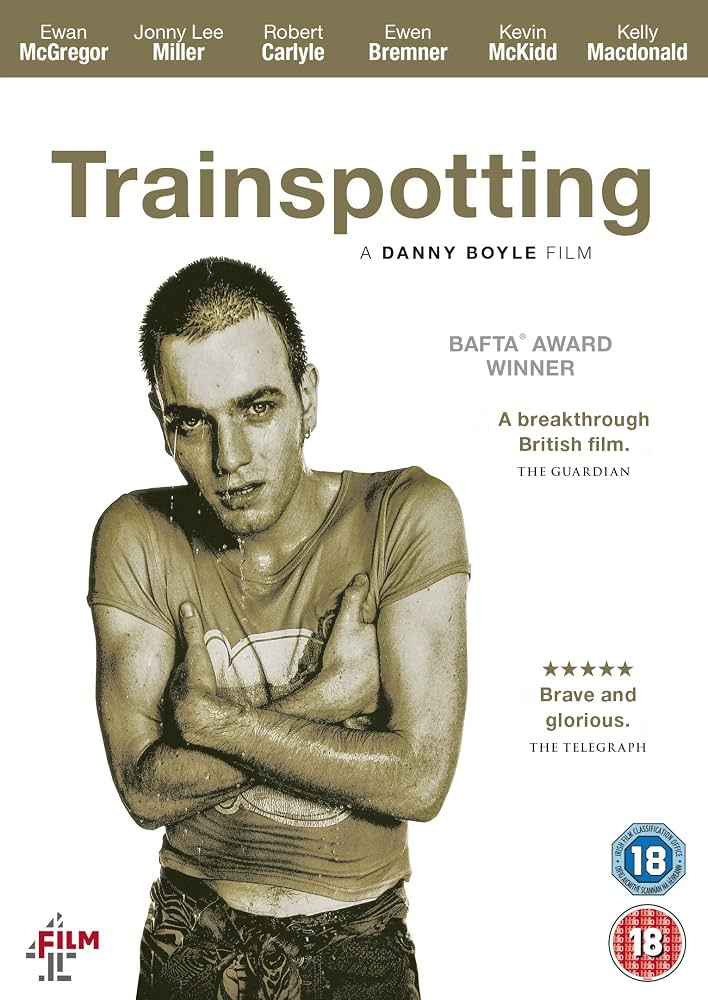
Irvine Welsh wrote the original 1993 novel based loosely on his own experiences in the late-1980s Edinburgh punk and drug scene. Before Welsh, stories about heroin addiction were usually written from an outside, patronizing perspective. Welsh took quite a radical approach in the way he chose to illustrate the highs and lows of addiction; however, Welsh’s book was widely considered “unfilmable” because it lacked a linear plot. Screenwriter John Hodge performed a minor miracle by carving a cohesive, driving three-act narrative out of the book’s scattered vignettes.
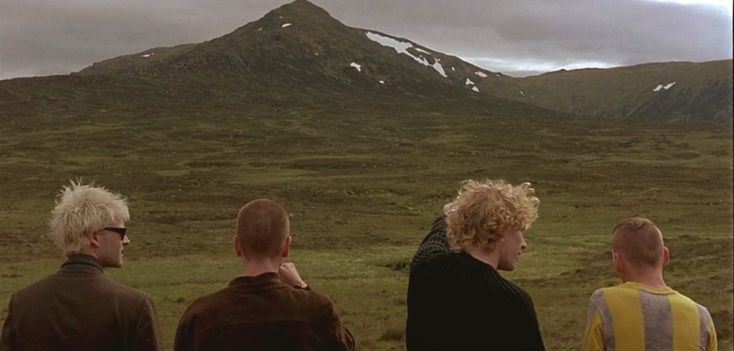
British cinematographer Brian Tufano was the director of photography for the project, working in tandem with director Danny Boyle. They took a very considered approach to the composition of the shots, as well as using specialist cinema lenses, lighting, and colour-grading techniques to show the ecstasy the characters were experiencing before their crashes. The composition and use of wide and ultra-wide angle lenses create an extremely immersive feel, as if we’re in the room experiencing the shit with them.
The novel and screenplay were both written in the Scots dialect.
Personally, I see many directors spanning many formats of moving image and pop culture taking inspiration from Tufano’s/Boyles cinematography, especially Scottish directors. One being CSM alumnus Aidan Zamiri in his direction of the “360” music video for Charli XCX, which adopts a similar closeness of composition and use of wide-angle lenses.